ON
VIEW
VIEW
Arts 2026
.jpg)
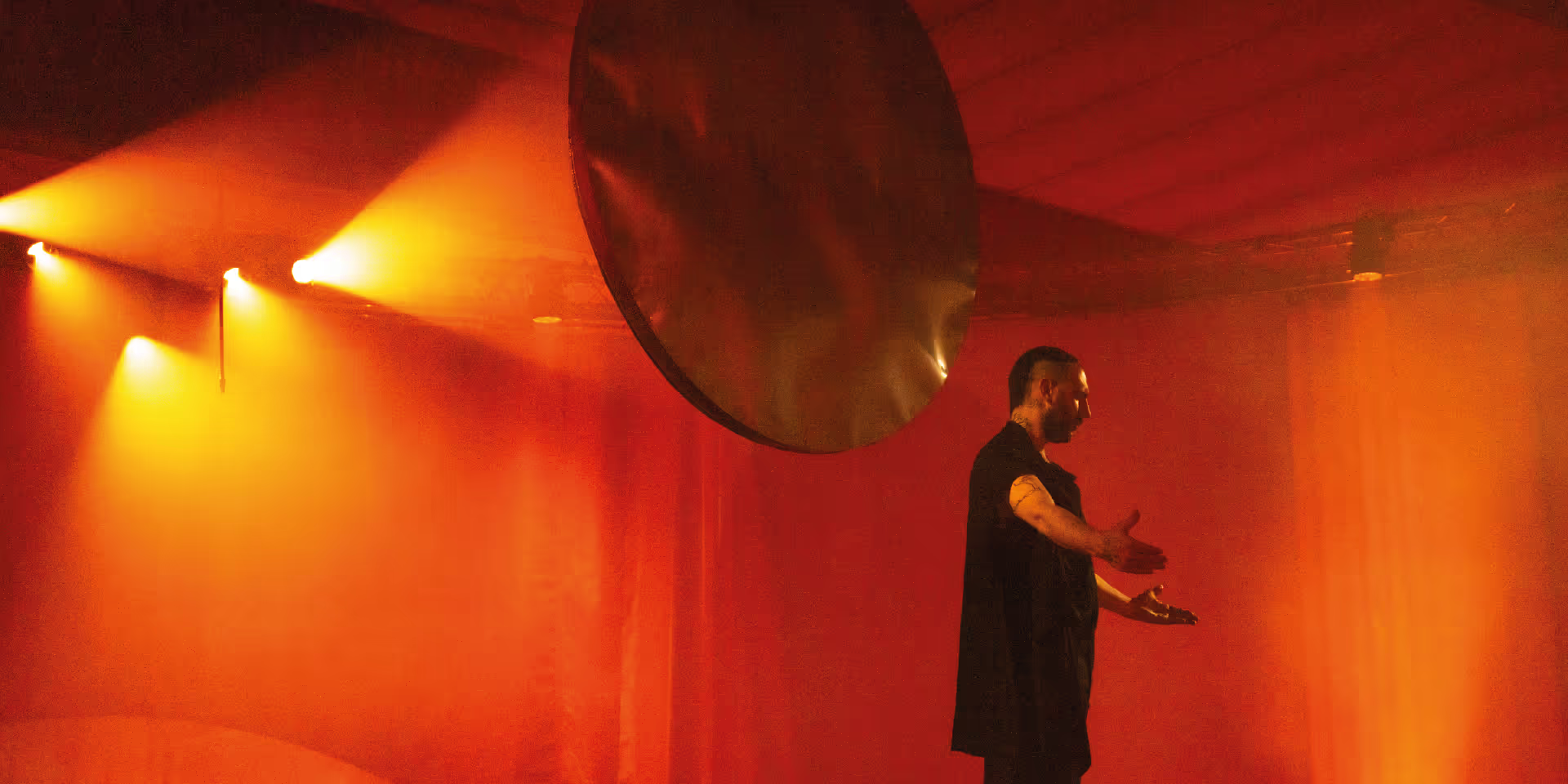
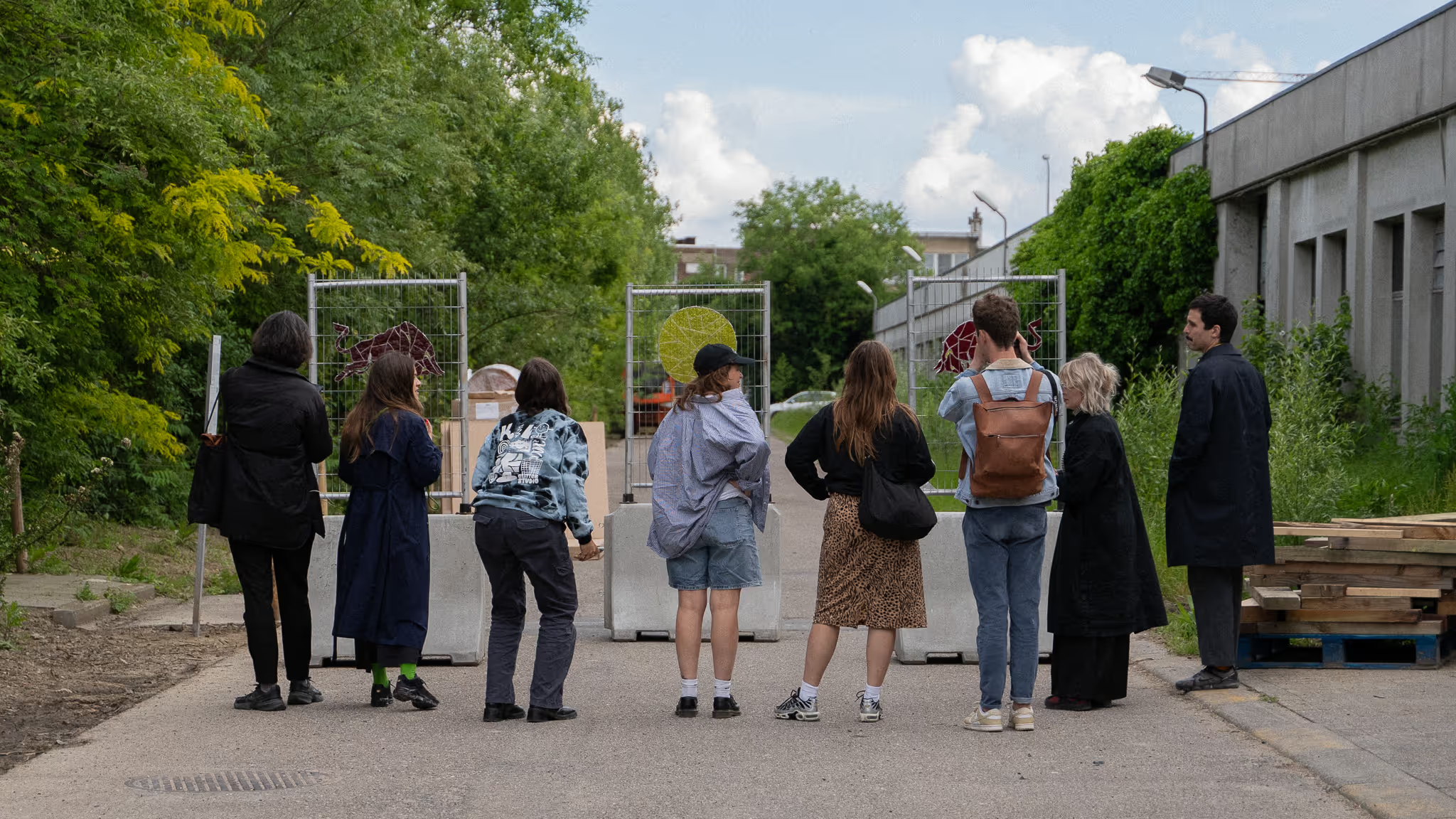
If you open-up a little more and go even deeper, the topics go further and the performances are wilder, there might be some audience participation of the worst kind, alongside an artisanale bakery and a weird collaboration with the quartier. Expect D.I.Y. special effects, meets homosexual desires, meets institutional-diharria, meets chaotic energy, meets unsubsidised hemorrhoids, meets you, the audience in the intimacy of the moment.
While plenty of underground spaces and art institutions (taking it over at one point) are serving as the breeding ground for gentrification projects in neighbourhoods such as Molenbeek, Anderlecht and Schaarbeek, ANAL Pompidou has the desire to gentrify the center of Brussels in the opposite direction. With his Bottom-up initiative, specialised in D.I.Y.trash, Anal hopes soon the rents will go down, in Louise, Dansaert, Petite Sablon, Grand Sablon, in front of the European parliament and in the whole municipality of Uccle. “i’m so high on art, but so low on money. High meets low, low meets high, where am i?”
{{images-1}}
Simon Van Schuylenbergh (1994°, Aalst, BE) is a performance artist, living and working in Brussels. He obtained his master's degree in Drama at KASK, Ghent, in 2017. Since 2015, he has created several solos with real size zebras in theaters, galleries and on the bus or train. Simon lived and worked in the off-space volksroom from 2019 to 2023 and has also been active in the Brussels Artist Commons in recent years. In the summer of 2019, together with Anna-Franziska Jäger and Nathan Ooms, he co-founded the performance platform Ne Mosquito Pas, where a community of Brussels artists reflect on their personal notions of failure and success. Since August 2025, Van Schuylenbergh's new alter ego, Anal Pompidou, has opened a performance cabaret in the centre of Brussels above the restaurant of his fiancé Steven Sommeryns between Sablon and the Marolles. Anal Pompidou is open permanently on days most people put their rubbish out.
During Horst Festival, Anal Pompidou invites artists every festival day, performing twice at 4pm and 7.30 pm
14/05 Anal Pompidou, Spring Showers, Drag Couenne, Rosie Sommers
15/05 Anal Pompidou, Manizja Kouhestani, Thymios fountas, Charlotte Nagel
16/05 Anal Pompidou, Castélie Yalombo, Micha Goldberg, Anna-Franziska Jäger


The rich text element allows you to create and format headings, paragraphs, blockquotes, images, and video all in one place instead of having to add and format them individually. Just double-click and easily create content.
A rich text element can be used with static or dynamic content. For static content, just drop it into any page and begin editing. For dynamic content, add a rich text field to any collection and then connect a rich text element to that field in the settings panel. Voila!
Headings, paragraphs, blockquotes, figures, images, and figure captions can all be styled after a class is added to the rich text element using the "When inside of" nested selector system.

.webp)
.jpg)

.jpg)
.avif)